Summary:
You’ve been thinking about it for months. More space. Natural light. A room where you can actually enjoy the view without freezing in January or sweating through July. A 4-season room addition sounds perfect—until you start looking into what it actually takes to build one in Nassau County.
Suddenly you’re facing questions about permits, foundation requirements, HVAC integration, and whether your existing structure can even support the addition. The planning phase matters because mistakes here cost thousands to fix later. This guide breaks down what you need to know before you commit to the project, from understanding Nassau County’s permit requirements to budgeting for the components that make a sunroom usable year-round.
Understanding What Makes a True 4-Season Room Addition
The difference between a screened porch and a four-season room isn’t just glass instead of screens. It’s insulation, climate control, and a foundation built to the same standards as the rest of your house.
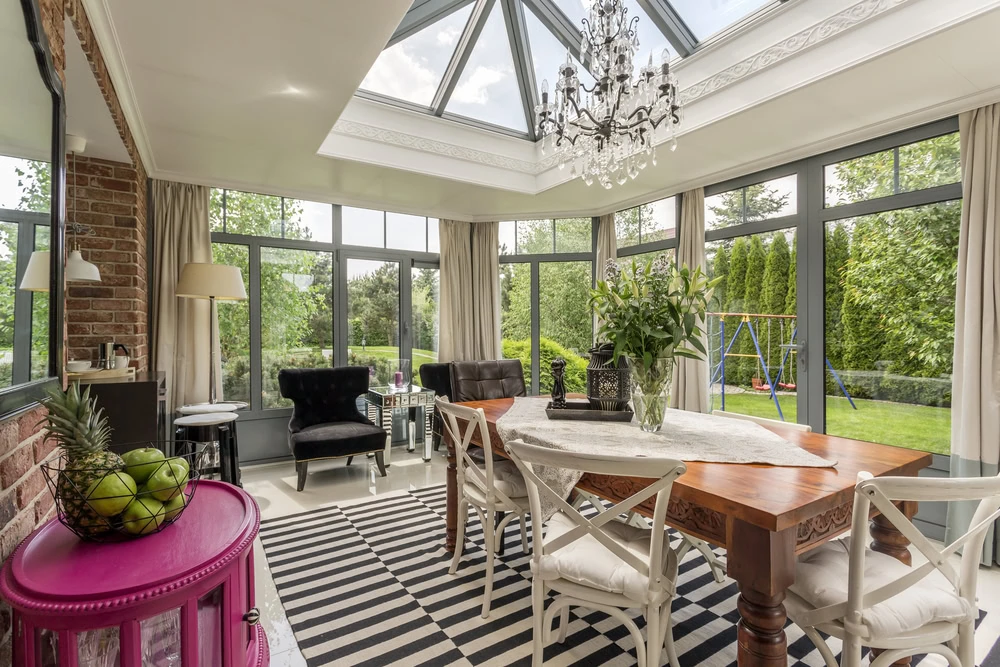
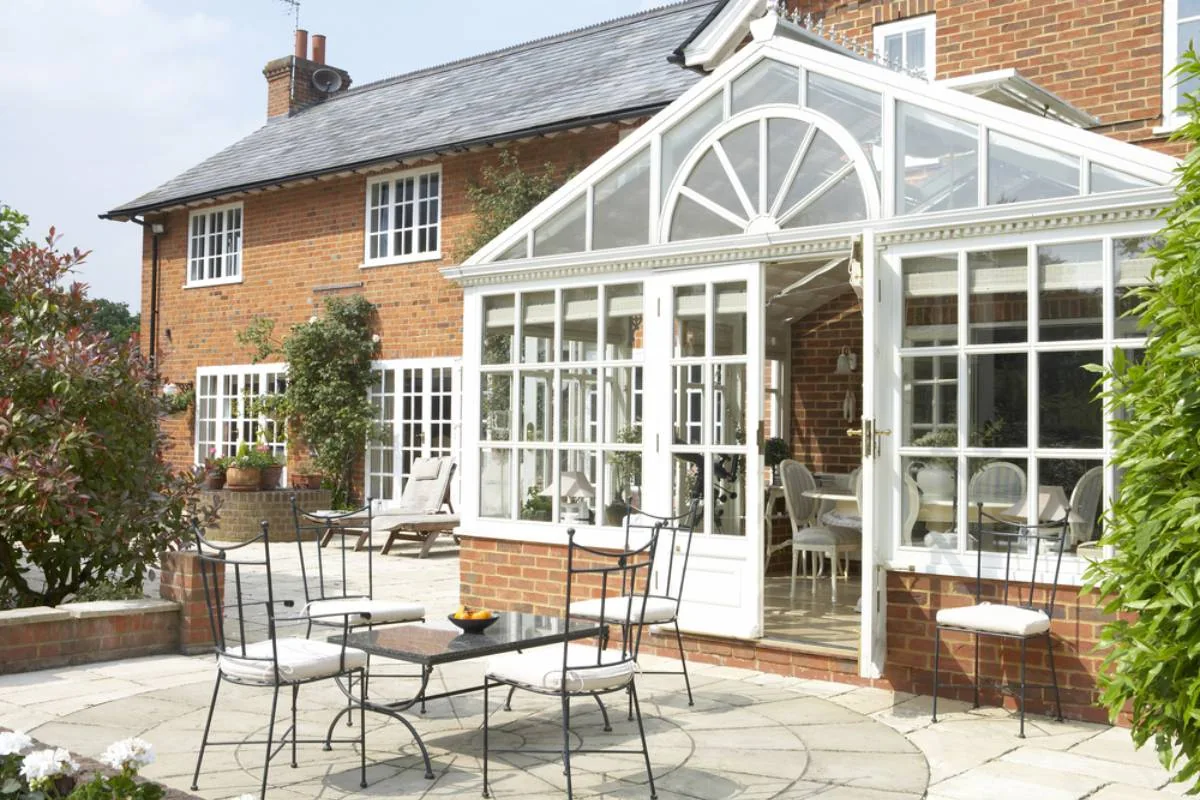
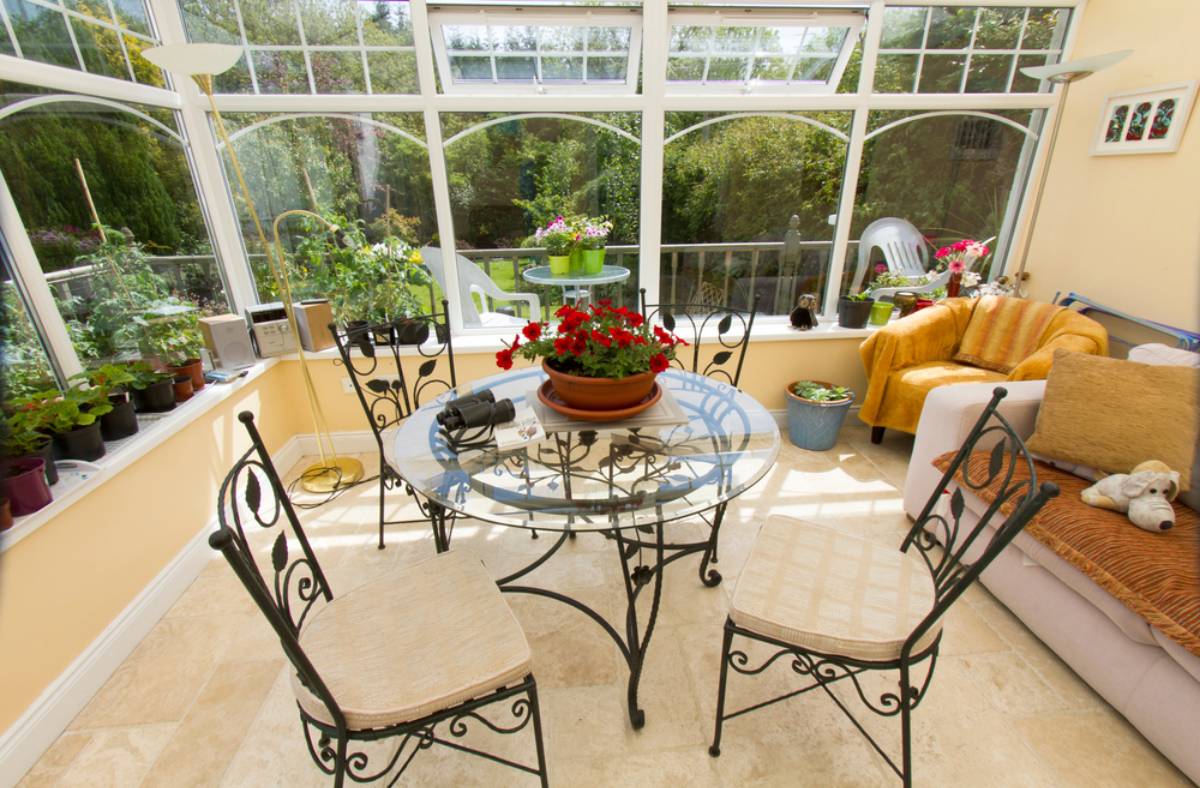
A real 4-season room addition includes insulated walls, ceiling, and floor. It connects to your home’s HVAC system or has its own dedicated heating and cooling. The windows are double-pane at minimum, usually with Low-E coating to manage heat transfer. You’re building a permanent extension of your living space, not a seasonal add-on you close off when temperatures drop.
That’s why the planning process looks more like a traditional room addition than a simple patio enclosure. You need permits. You need proper foundation work. And you need to think through how the new space integrates with your existing home’s structure, utilities, and design.
Sunroom Addition to House: Foundation and Structural Requirements
Your four-season room needs a foundation that meets residential building code. In Nassau County, that means going below the frost line—typically 42 inches deep in this region. You’re looking at either a concrete slab or reinforced deck structure capable of supporting insulated walls and climate systems.
This isn’t optional. The foundation determines whether your addition can handle Long Island’s freeze-thaw cycles without cracking, settling, or causing structural problems. It also affects how you tie into your existing home’s structure. A poorly planned foundation leads to gaps, air leaks, and moisture issues that compromise the entire addition.
The structural connection matters just as much. Your addition’s framing needs to integrate with your home’s existing walls and roof. That often means opening up exterior walls, adding support beams, and ensuring the new roof ties in properly to prevent leaks. Many Long Island homes were built decades ago using construction methods that may need reinforcement before they can support a modern addition.
Foundation work also determines where utilities run. You’ll need electrical service, and if you’re extending your central HVAC system, that means running ductwork from your existing unit. The foundation phase is when you address drainage, waterproofing, and site preparation—all the unglamorous work that prevents problems five years down the line.
Expect foundation costs to run $4,000 to $8,000 depending on size and site conditions. If your property has drainage issues, rocky soil, or requires extensive excavation, that number climbs. This is one area where cutting corners costs more in the long run.
HVAC Integration and Climate Control Planning
A four-season room that’s too hot in summer and too cold in winter defeats the purpose. Climate control isn’t an afterthought—it’s part of the core planning process.
You have two main options: extend your existing HVAC system or install a dedicated mini-split system. Extending central HVAC means running new ductwork to the addition, which works if your current system has enough capacity to handle the extra square footage. Most systems don’t, especially in older homes. Overloading your HVAC leads to uneven temperatures throughout the house and premature system failure.
Mini-split systems cost $2,500 to $4,000 and give you independent control over the sunroom’s temperature without affecting the rest of your home. They’re more efficient for additions because they don’t lose energy through long duct runs. Installation is easier too—just a small hole through the wall to connect the indoor and outdoor units.
But climate control goes beyond just heating and cooling equipment. Insulation determines how hard your system works. R-13 minimum in the walls, proper insulation in the ceiling and floor, and quality windows with Low-E coating all reduce your energy costs and improve comfort. Skimping on insulation to save a few hundred dollars means paying more every month in utility bills.
Ventilation matters too, especially in a glass-heavy room that can trap heat. Operable windows, ceiling fans, and proper airflow planning prevent the greenhouse effect on sunny afternoons. You want the option to open up for fresh air or seal tight when weather demands it.
Plan for your HVAC decisions during the design phase, not after framing is complete. Running ductwork or electrical for a mini-split is much easier before walls are closed up.
Putting an Addition on a House: Navigating Nassau County Permits
Every four-season room addition in Nassau County requires permits. No exceptions. The permit process verifies that your project meets building codes, respects zoning setbacks, and won’t create safety or structural issues.
You’ll submit detailed plans showing the addition’s size, location on your property, structural specifications, electrical work, and HVAC integration. The building department reviews these plans to confirm compliance with local codes. That review can take two to six weeks for standard projects, longer if your plans need revisions or if you’re in a historic district with additional requirements.
Skipping permits isn’t worth it. You risk fines, being forced to tear down the addition, complications with homeowners insurance, and problems when you eventually sell the home. Future buyers will ask for permits, and unpermitted work tanks your property value or kills deals entirely.
Home Addition Permits: What Nassau County Requires
Nassau County permit applications require architectural plans drawn by a licensed professional, a survey showing your property lines, proof of homeownership, and potentially zoning variance approvals if your addition approaches setback limits.
The plans need to detail everything: foundation specifications, framing methods, window and door locations, electrical panel upgrades if needed, HVAC integration, insulation values, and how the addition ties into your existing structure. The building department isn’t just checking that you’re adding a room—they’re verifying that the addition is safe, energy-efficient, and built to last.
Structural changes trigger the most scrutiny. Removing or modifying walls, especially load-bearing walls, requires engineering calculations proving the new structure can support the loads. Adding square footage means confirming you’re not exceeding lot coverage limits or violating setback requirements that dictate how close you can build to property lines.
Most Nassau County towns also require separate permits for electrical and plumbing work. Your electrician and HVAC contractor pull these permits, but you need to coordinate timing so inspections happen at the right phases of construction.
Working with a contractor experienced in Nassau County permitting saves time and headaches. They know what the local building departments expect, how to prepare plans that pass review on the first submission, and how to schedule inspections efficiently. We handle all permit applications and town hearings, eliminating the back-and-forth that delays projects when homeowners try to navigate the process themselves.
Budget $250 to $1,500 for permit fees depending on your project’s scope. That’s separate from the cost of having architectural plans drawn, which can run several thousand dollars for complex additions.
Timeline Expectations and Inspection Requirements
Once permits are approved, construction can begin—but you’re not done with the building department. Nassau County requires inspections at multiple stages: foundation before concrete is poured, framing before walls are closed up, electrical and HVAC rough-ins, insulation, and final inspection before you can occupy the space.
Missing an inspection or failing one causes delays. If you close up walls before the framing inspection, you’re tearing out drywall to let the inspector verify the work. If electrical doesn’t pass, your electrician comes back to make corrections before you can proceed.
A typical four-season room addition takes three to six months from permit approval to final inspection, assuming no weather delays or material shortages. Foundation work takes two to three weeks. Framing and roofing another three to four weeks. Electrical, HVAC, insulation, and finish work fill the remaining time.
Winter weather can extend timelines in Nassau County. Concrete work requires temperatures above freezing, and roofing in snow or ice isn’t safe. Many homeowners start planning in winter for spring construction, giving them time to finalize designs, secure financing, and get permits approved before optimal building weather arrives.
Clear communication with your contractor about inspection schedules keeps the project moving. Experienced contractors know when to call for inspections and what inspectors look for, minimizing the risk of failed inspections that stall progress.
The permit process might feel bureaucratic, but it protects your investment. Permitted, inspected work means your addition is built correctly, safely, and in a way that adds value to your home rather than creating liability.
Making Your 4-Season Room Addition Project Successful
Planning a four-season room addition in Nassau County comes down to understanding what you’re actually building—a permanent, climate-controlled extension of your home, not a simple patio enclosure. That means proper foundation work, HVAC integration, quality insulation, and navigating the permit process correctly.
The homeowners who get the best results start with realistic expectations about timelines, costs, and regulatory requirements. They work with contractors who know Nassau County’s building codes and have experience managing the entire process from permits through final inspection. And they budget for the components that matter: solid foundations, proper insulation, energy-efficient windows, and climate control systems that make the space comfortable year-round.
We’ve been guiding Nassau County homeowners through this process for nearly 50 years, handling everything from permit applications and town hearings to foundation work and HVAC integration. If you’re ready to add year-round living space to your home, that expertise makes the difference between a smooth project and one filled with delays, surprises, and costly corrections.