Summary:
You built that sunroom to enjoy more of your home. But by mid-July, it’s sitting empty because walking in feels like stepping into a greenhouse. The temperature climbs into the 90s while the rest of your house stays comfortable at 72, and you’re left wondering if you made a costly mistake.
You didn’t. Sunrooms overheat for specific, fixable reasons. Some solutions are simple and inexpensive. Others require professional help but solve the problem permanently. What matters is understanding why your space traps heat and which fixes match your situation. Let’s start with what’s actually causing the problem.
Why Your Sunroom Turns Into an Oven Every Summer
Glass is the reason your sunroom exists. It’s also the reason it overheats. When sunlight passes through windows, it doesn’t just light up the room—it converts to heat the moment it hits your furniture, floor, and walls. That heat gets trapped inside, and without proper airflow, temperatures keep climbing.
This is the same principle that makes greenhouses work. The difference is that greenhouses are designed to trap heat on purpose. Your sunroom wasn’t, but it’s doing it anyway. Add in Long Island’s summer humidity, and the space becomes genuinely uncomfortable.
The problem gets worse when your sunroom lacks the basics that would normally regulate temperature. Poor ventilation means hot air has nowhere to go. Single-pane windows offer almost no resistance to heat transfer. And if your sunroom wasn’t built with proper insulation, you’re fighting a losing battle every time Nassau County temperatures hit the high 80s in July and August.
How Glass Traps Heat and Raises Indoor Temperature
Not all glass behaves the same way when it comes to heat. Single-pane windows are the worst offenders—they let solar energy pour straight through with minimal resistance. That energy doesn’t stay as light. It converts to heat the second it touches a surface inside your sunroom.
Once that heat builds up, it has nowhere to go. Glass that let the light in doesn’t let the heat back out. The result is a space that feels 10 to 20 degrees hotter than the outdoor temperature, even with windows cracked open.
Nassau County summers bring another layer of complexity: humidity. When you combine trapped heat with moisture in the air, the space doesn’t just feel hot—it feels oppressive. Your body can’t cool itself through evaporation when the air is already saturated, so even moderately warm temperatures become unbearable.
The type of glass matters more than most homeowners realize. Older sunrooms often used whatever windows were affordable at the time. Modern insulated glass with low-E coatings can reflect up to 86% of solar heat before it ever enters the room. That’s not a small difference—it’s the gap between a sunroom you avoid and one you actually use.
If your sunroom was built more than 15 years ago, there’s a good chance the glass is working against you. Upgrading to energy-efficient windows won’t just make summer more comfortable. It’ll also help with winter heating costs and protect your furniture from UV damage year-round.
Poor Ventilation Keeps Hot Air Trapped Inside
Even when outdoor temperatures are reasonable, a sunroom with poor airflow will overheat. Hot air rises, and if there’s no way for it to escape, it just sits at the ceiling, radiating heat back down into the space. You end up with a room that feels stagnant and stuffy no matter how many windows you open.
Proper sunroom ventilation requires more than just cracking a window. You need air movement that follows the natural flow of heat. That means vents near the ceiling to let hot air escape and openings lower down to pull cooler air in. Without both, you’re not creating circulation—you’re just letting some air leak out while the temperature stays high.
Many sunrooms were built without any ventilation system at all. The assumption was that opening windows would be enough. In reality, that only works on mild days with a decent breeze. When Nassau County humidity kicks in and the air outside is barely moving, those open windows don’t do much.
Adding ceiling vents is one of the most cost-effective fixes for an overheated sunroom. They don’t require major construction, and they work with the physics of how air moves rather than fighting against it. Pair them with a ceiling fan to push hot air toward those vents, and you’ve created a system that keeps air circulating instead of stagnating.
Exhaust fans take this a step further. Installed in ceiling vents, they actively pull hot air out of the room instead of waiting for it to drift away on its own. This creates negative pressure that draws cooler air in through lower openings, establishing a continuous flow that prevents heat buildup.
The key is understanding that ventilation isn’t about letting air in or out—it’s about creating a path for air to move through. When hot air has an easy exit route and cooler air has a clear entry point, your sunroom stops acting like a heat trap and starts feeling like the comfortable space you intended.
Sunroom Cooling Solutions That Actually Work
Fixing an overheated sunroom doesn’t always mean tearing everything out and starting over. The right solution depends on what’s causing the problem and how you use the space. Some homeowners need quick, affordable fixes. Others want permanent upgrades that make the room usable year-round.
Start by identifying your biggest issue. Is the room unbearable because of direct sunlight beating down through the roof? That’s a shading or glass problem. Does it feel stuffy even when it’s not that hot outside? You’re dealing with ventilation. If the temperature swings wildly between day and night, insulation is the culprit.
Once you know what you’re fixing, you can choose solutions that match your budget and timeline. Some options work well together. Others are alternatives you pick between based on your priorities. What matters is addressing the root cause instead of just treating symptoms.
Sunroom Ventilation Systems and Air Circulation
Improving airflow is often the fastest way to make a hot sunroom tolerable. Ceiling fans are the simplest starting point—they’re inexpensive, easy to install, and effective at keeping air moving. A fan doesn’t actually cool the air, but it creates a breeze that makes the space feel several degrees cooler by helping your body’s natural cooling process work better.
For real temperature reduction, you need to move hot air out and bring cooler air in. Ceiling vents positioned high on walls or in the roof itself give hot air an escape route. When combined with lower vents or operable windows, they create cross-ventilation that prevents heat from accumulating in the first place.
Exhaust fans installed in ceiling vents take this concept further by actively pulling hot air out instead of waiting for it to rise and drift away. This creates a continuous cycle where hot air exits through the top and cooler air gets drawn in from below. On days when there’s no natural breeze—common during Long Island’s humid summer stretches—this mechanical assistance makes the difference between a usable room and an oven.
Floor fans positioned strategically can push warm air up toward ceiling vents, working with the exhaust system to accelerate the process. The goal is to prevent any pocket of air from sitting still long enough to heat up. Constant circulation means constant temperature regulation.
The mistake most homeowners make is thinking one solution handles everything. A ceiling fan alone won’t fix a sunroom with no ventilation openings. Vents without fans won’t create enough airflow on still, humid days. The most effective approach combines passive ventilation (vents that let air move naturally) with active circulation (fans that keep it moving even when conditions aren’t ideal).
For Nassau County’s summer climate, where humidity often makes the air feel heavier and less willing to move, mechanical ventilation becomes especially important. Relying solely on natural breezes means your sunroom is only comfortable when the weather cooperates. Adding fans and exhaust systems means you control the environment instead of hoping for the right conditions.
Glass Room Cooling With Window Treatments and Upgrades
The glass in your sunroom is either helping you stay cool or making the problem worse. There’s no middle ground. If you’re dealing with single-pane windows or glass without any solar protection, you’re letting heat pour into the space all day long. Fixing that problem starts with either treating the glass you have or replacing it with something better.
Window tinting and solar film are the quickest retrofits. Applied directly to existing glass, these films block a significant portion of solar heat while still allowing light through. They won’t turn your sunroom dark, but they will reduce the greenhouse effect by reflecting infrared energy before it converts to heat inside the room. Quality films can block 50% to 70% of heat transmission, which translates to noticeably cooler temperatures on sunny days.
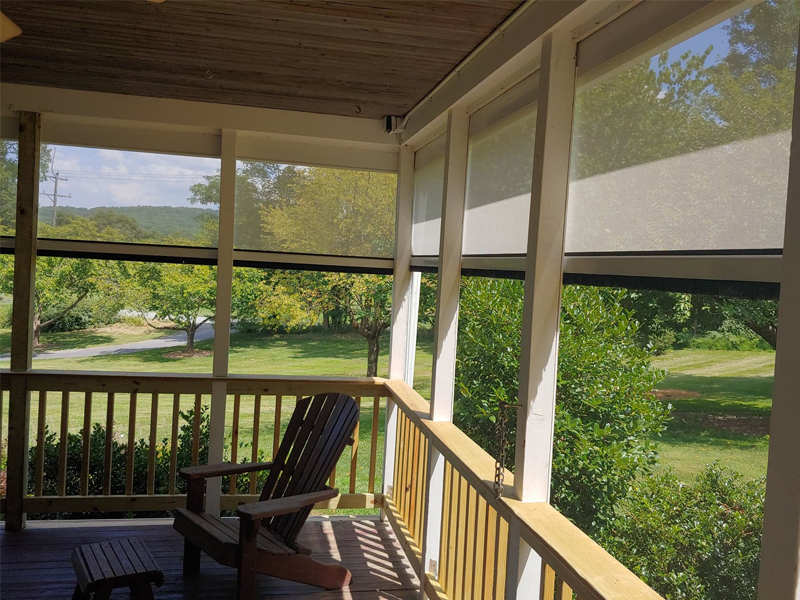
Window treatments like blinds, shades, and thermal curtains give you control over how much sun enters at different times of day. The trick is choosing treatments that block heat without killing the natural light that makes a sunroom worth having. Cellular shades with reflective backing work well—they insulate while still allowing filtered light through. Exterior shades or awnings are even more effective because they stop sunlight before it hits the glass.
For a permanent solution, upgrading to insulated, low-E glass changes everything. Modern energy-efficient windows use multiple panes with gas fills and special coatings that reflect solar heat while allowing visible light to pass through. This isn’t just about comfort—it’s about physics. Low-E coatings can reflect up to 86% of the sun’s infrared energy, meaning the heat never makes it inside to begin with.
Double-pane or triple-pane windows with argon or krypton gas fills provide insulation that single-pane glass simply can’t match. The gas between panes acts as a thermal barrier, slowing heat transfer in both directions. That means your sunroom stays cooler in summer and warmer in winter without relying as heavily on heating and cooling systems.
The cost difference between treating existing glass and replacing it entirely is significant. Tinting and films might run a few hundred dollars. New energy-efficient windows could cost several thousand depending on the size of your sunroom. But if your current glass is the main reason the room is unusable four months out of the year, replacement often makes more financial sense than repeatedly trying to compensate with other fixes.
For homeowners in Nassau County dealing with both summer heat and winter cold, insulated glass pays for itself through reduced energy costs and year-round usability. A sunroom that’s comfortable in July and January gets used more, which means you’re actually getting value from the square footage you paid to build.
Making Your Sunroom Comfortable Year-Round
An overheated sunroom isn’t a design flaw you have to live with. It’s a solvable problem with clear causes and proven fixes. Whether you need better ventilation, upgraded glass, or a complete HVAC solution depends on your specific situation—but the solution exists.
Start with the simplest fixes that address your biggest pain point. If poor airflow is making the space stuffy, add ventilation and fans. If direct sunlight is cooking everything inside, treat or upgrade your glass. For rooms that need to function year-round in Long Island’s climate, professional HVAC integration gives you the control that makes the investment worthwhile.
The homeowners who get the most from their sunrooms are the ones who stop fighting the space and fix what’s not working. If you’re ready to make your sunroom usable this summer instead of avoiding it, we’ve spent nearly 50 years solving exactly these problems for Nassau County homeowners at Four Seasons Sunrooms of Syosset.