Summary:
You want more space. You’re tired of your deck sitting empty half the year because Long Island weather won’t cooperate. A sunroom sounds perfect—until you realize there are different types, and the choice between a 3-season sunroom and a 4-season room isn’t just about preference.
It’s about budget, yes. But it’s also about Nassau County’s winters, summer humidity, and whether you’ll actually use the space enough to justify the investment. Some homeowners love their 3-season rooms. Others wish they’d spent more upfront for year-round comfort.
Here’s what you actually need to know before you decide.
What Is a 3 Season Sunroom and How Does It Work
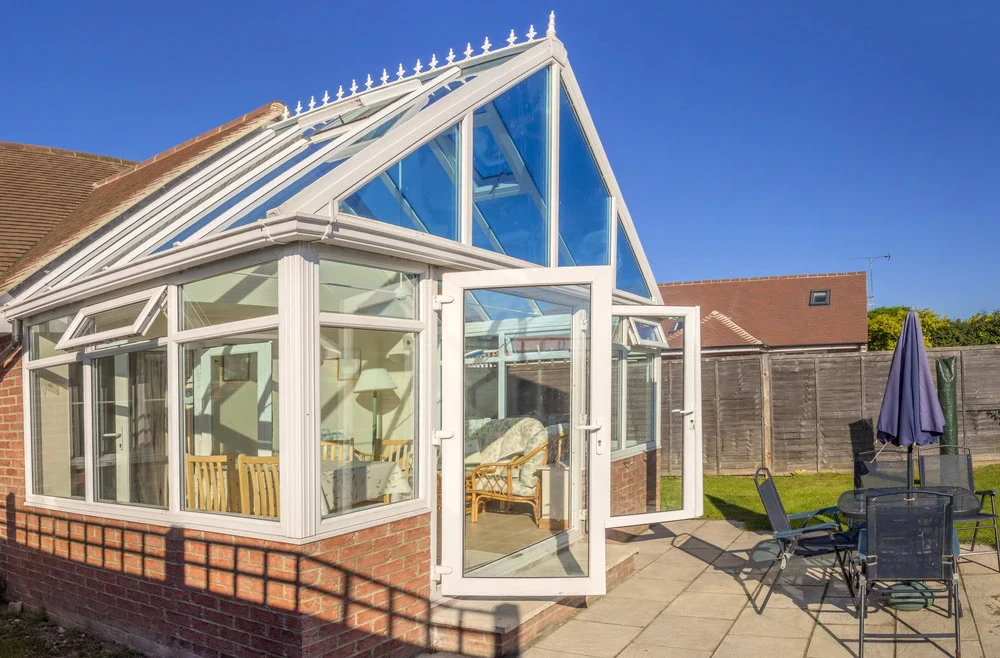
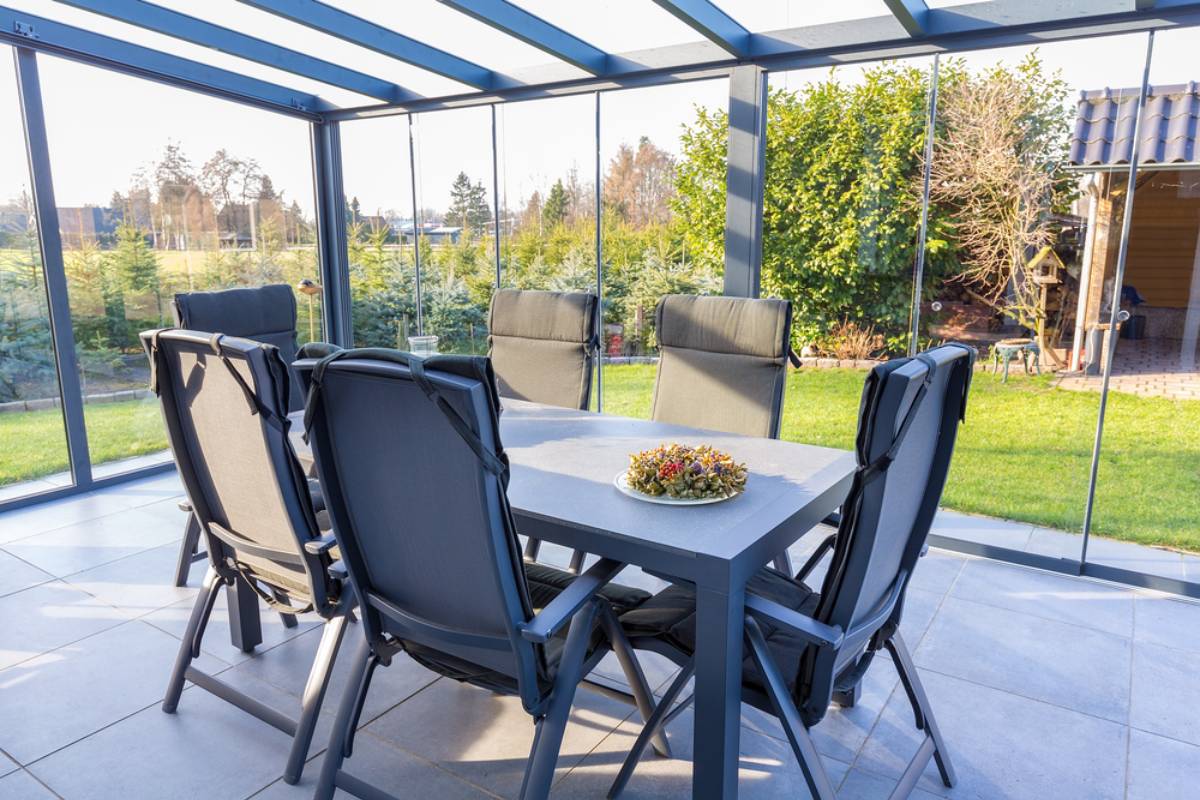
A three season sunroom is built for spring, summer, and fall use. Think of it as an enclosed patio with windows instead of screens—protection from bugs, rain, and wind, but not from temperature extremes.
These rooms typically use single-pane glass or basic double-pane windows. The frames are lightweight aluminum. There’s minimal insulation in the walls, floors, or ceiling. No connection to your home’s HVAC system.
That construction keeps costs down. But it also means the space mirrors outdoor temperatures more than indoor comfort. On a 40-degree March morning, your three season sunroom feels like 40 degrees. On a 90-degree August afternoon with Long Island humidity, it can feel even hotter.
How Much Does a 3 Season Sunroom Cost in Nassau County
For a typical 12×14 foot three season sunroom in Nassau County, you’re looking at roughly $10,000 to $40,000 depending on materials, site conditions, and whether you’re building over an existing deck or starting from scratch.
That breaks down to about $80 to $230 per square foot installed. The range is wide because details matter. If you already have a concrete patio in good shape, you skip foundation work. If your project needs permits, inspections, and site prep, costs climb.
Labor accounts for 40-60% of the total. In Nassau County, that means higher rates than national averages. Permit review fees run $300 just for the building department to look at your plans. Some townships require professional architectural drawings, adding another expense.
Material choices shift the price too. Basic aluminum frames with single-pane glass land on the lower end. Upgraded double-pane windows, better finishes, or larger dimensions push you toward $40,000 or more.
One advantage of a 3-season room: you can often build over an existing deck or patio, using that foundation and cutting costs significantly. You’re essentially enclosing space you already have rather than adding square footage from the ground up.
The construction timeline is faster than a 4-season build. Less insulation, no HVAC integration, simpler permitting in some cases. That means less disruption to your daily routine and quicker access to your new space.
But here’s the catch Nassau County homeowners discover: the lower upfront cost doesn’t always mean better value. If you can only use the room comfortably 7-8 months a year, you’re paying for space that sits empty when you need it most—during winter when you’re desperate to escape cabin fever.
When a Three Season Sunroom Makes Sense for Long Island
A 3-season sunroom works best when you’re realistic about how you’ll use it. If you’re looking for a party space for graduations, summer barbecues, and fall gatherings, it delivers. If you want a bright spot to enjoy your morning coffee from April through October, it fits that need.
Budget-conscious homeowners find value here. You’re getting enclosed, protected space for roughly half the cost of a 4-season room. That makes it accessible when a full addition isn’t financially feasible right now.
Some people use a three season sunroom as a stepping stone. You install the 3-season version now, enjoy it for a few years, and convert it to 4-season later when budget allows. That phased approach spreads the investment over time.
Location on your property matters too. If the sunroom faces south, you get maximum passive solar heating. Those sunny fall and spring days can make the space comfortable even when outdoor temperatures dip. East-facing rooms are perfect for morning use but cool off by afternoon.
The reality for Nassau County: our winters are harsh. Nor’easters, heavy snow, weeks of temperatures in the 20s and 30s. A 3-season room becomes completely unusable from roughly December through March. That’s four months of the year when the space you paid for sits empty.
Summer brings its own challenges. Long Island humidity can make an uninsulated glass room unbearable during July and August afternoons. You’ll rely on fans, open windows, and timing your use for mornings and evenings.
If you’re okay with those limitations—if you genuinely plan to use the space seasonally and accept it won’t work year-round—a three season sunroom can be a smart, budget-friendly choice. Just don’t convince yourself you’ll be fine with seasonal use if what you really want is a room you can enjoy every single day.
All Season Sunroom Construction and Year-Round Performance
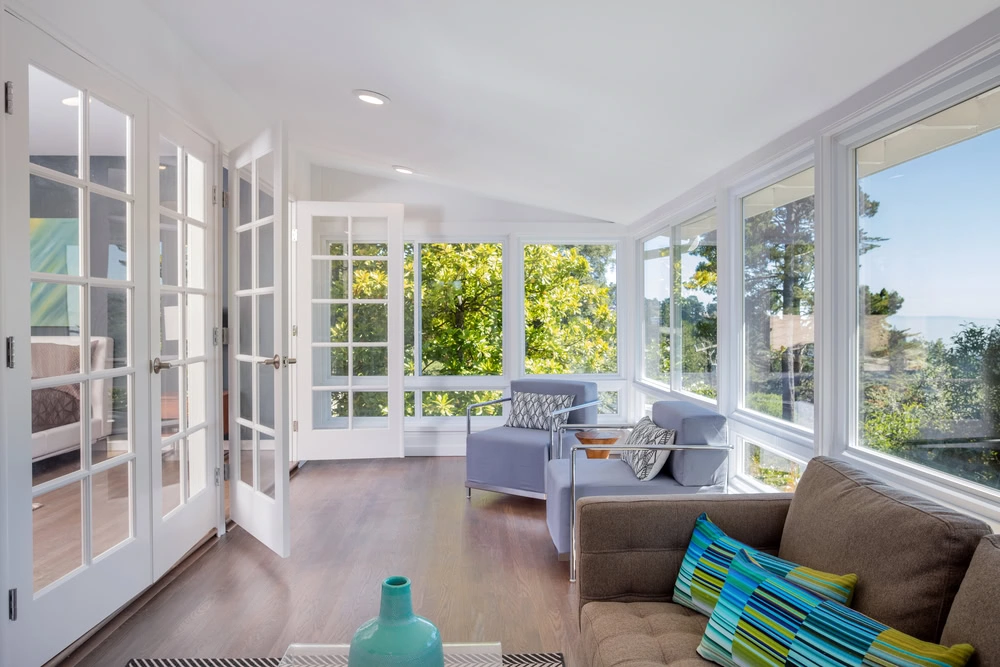
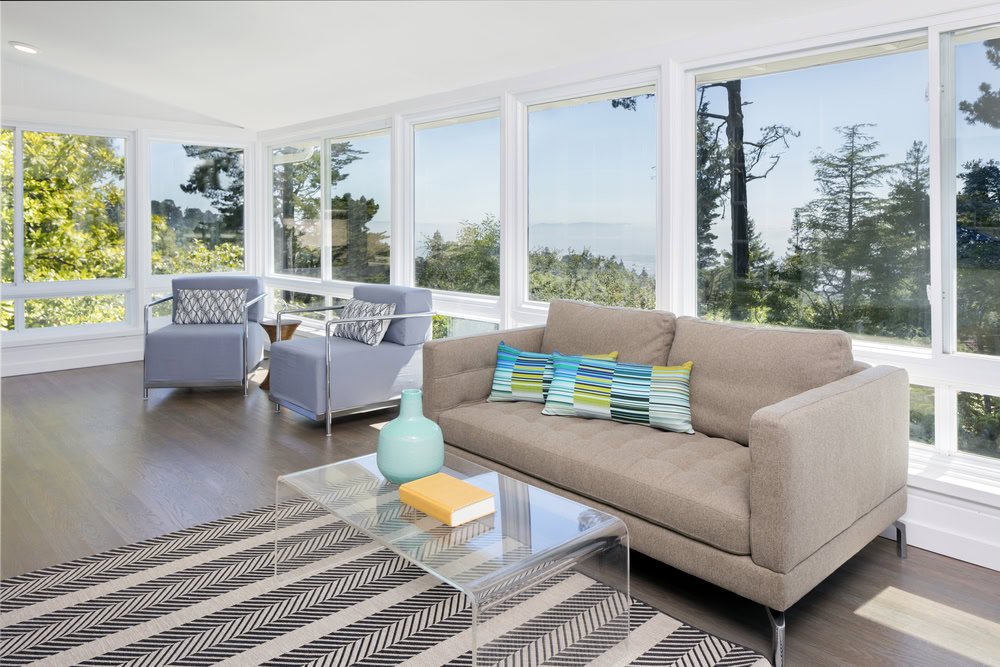
A 4-season sunroom—also called an all season sunroom—is engineered for year-round comfort. It’s built like a true room addition, not a glorified porch enclosure.
The construction includes full insulation in walls, ceilings, and floors. Double-pane or triple-pane insulated glass windows with Low-E coatings. Thermally engineered frames that prevent heat transfer. Connection to your home’s HVAC system or a dedicated mini-split for climate control.
That level of construction means you can use the space in January just as comfortably as June. The room maintains consistent temperatures regardless of what’s happening outside. For Long Island homeowners dealing with temperature swings that exceed 70 degrees between seasons, that’s not a luxury—it’s functionality.
The Real Cost Difference Between 3-Season and 4-Season Sunrooms
Four-season sunrooms in Nassau County typically run $25,000 to $80,000 for a standard-sized room, with some custom projects reaching $120,000. That’s roughly $200 to $400 per square foot installed.
The price gap between 3-season and 4-season isn’t just about materials. It’s about systems. You’re adding HVAC connections or a dedicated mini-split system. Electrical work for outlets, lighting, and climate controls. Insulation throughout. Higher-grade windows. Often a more robust foundation to support the additional weight.
Permit requirements get more complex too. Nassau County building codes treat 4-season rooms differently because they’re considered finished living space. That means stricter energy efficiency standards, more detailed structural plans, and additional inspections throughout construction.
But here’s what the higher cost buys you: a room that actually adds to your home’s official square footage. When an appraiser evaluates your property, a properly permitted 4-season sunroom counts as livable space. A 3-season room often doesn’t.
That distinction matters at resale. Four-season sunrooms typically deliver 50-70% ROI in Nassau County’s market. Three-season rooms offer value, but less of it, because buyers recognize the seasonal limitations.
The ongoing costs differ too. Yes, you’ll pay to heat and cool a 4-season room. But you’re using it 12 months a year instead of 8. The cost per month of actual use often works out similarly—you’re just spreading it across more months and getting more value from the space.
Many Nassau County homeowners who initially chose 3-season to save money end up converting to 4-season within two years. The conversion costs more than building it right the first time because you’re retrofitting insulation, upgrading windows, and adding HVAC to an existing structure.
How Nassau County Climate Affects Your Sunroom Choice
Long Island’s weather isn’t mild. We get nor’easters that dump feet of snow. Summer humidity that makes outdoor living miserable. Temperature swings from the 20s in winter to the 90s in summer.
A 3-season sunroom in this climate gives you comfortable use from roughly April through November—maybe 8 months if you’re generous. December through March, the space is too cold without supplemental heating. And even with space heaters, you’re fighting poor insulation and single-pane windows that leak heat.
July and August bring the opposite problem. Without air conditioning, the glass traps heat and humidity. The space becomes a greenhouse. You can open windows for ventilation, but that lets in the humidity, bugs, and pollen you were trying to escape.
Four-season construction handles these extremes. Insulated glass reflects summer heat while retaining winter warmth. HVAC integration means you set a comfortable temperature and maintain it. The room becomes usable every single day, regardless of what’s happening outside.
That year-round functionality changes how you use the space. It’s not just a seasonal entertaining area. It becomes a legitimate home office, a daily breakfast nook, a year-round family room. You’re getting 12 months of value instead of 8.
Nassau County’s building codes recognize this too. Permits for 4-season rooms require meeting the same energy efficiency standards as your main house. That’s more work upfront, but it ensures the space performs properly for Long Island’s climate.
If you’re in a coastal area of Nassau County, you face additional considerations. Salt air, higher humidity, stronger winds. Materials need to withstand those conditions. A quality 4-season build with proper materials handles it. A budget 3-season room might show wear faster.
The question isn’t which type costs less. It’s which type actually works for how you want to live in your home, given the weather you’re dealing with 12 months a year.
Making the Right Sunroom Decision for Your Nassau County Home
The choice between a 3-season sunroom and a 4-season room comes down to honest answers. How will you actually use this space? Can you accept seasonal limitations, or will you regret not having year-round access? Does your budget allow for the upfront investment in climate control, or do you need the lower entry point of a 3-season build?
Both options add value to Nassau County homes. Both create bright, protected space that connects you to your outdoor views. The difference is in how many months you’ll actually enjoy what you’re paying for.
If you’re ready to explore which option makes sense for your property, budget, and lifestyle, we bring nearly 50 years of Long Island experience to the conversation. We handle permits, navigate Nassau County building codes, and offer financing options that make both 3-season and 4-season projects accessible.